
What you need to know:
- World leaders approved the UN Declaration on Sea Level Rise, which Member States finalised last month.
- The global mean sea level is on the rise around the world and accelerating, according to the UN Intergovernmental Panel on Climate Change.
- 770 million people live in coastal areas affected by sea level rise.
- Just a half-metre rise in sea levels by the end of the century could force between 150 million and 300 million people from their homes.
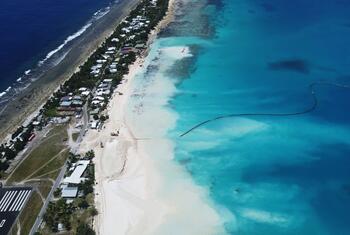
- Some small island States are already planning to be swallowed by the sea, with Tuvalu transitioning to become the world’s first “digital nation.”
- Nations contributing least to such climate change consequences as sea level rise are facing the worst impact.
Watch the morning session here and closing below on UN Web TV:
Context: Seas are rising faster than ever, UN report warns
Papua New Guinea UNDP
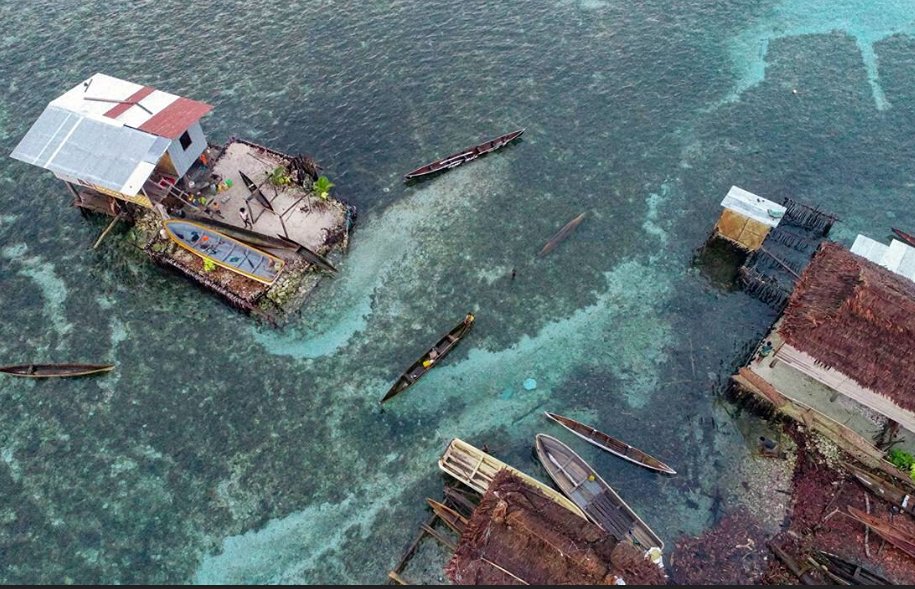
Sea levels are rising faster than ever and represent “one of the most profound threats to populations around the world”, according to a UN report presented at the UN Pacific Islands Forum in Palau.
The report, which examines the social, economic and legal consequences of rising sea levels, as well as ways to respond to them, was commissioned ahead of the 24 September UN high-level meeting on the topic.
“The sea level is rising. Our resilience, our financing and our ambition must rise faster,” warned Navid Hanif, head of the UN Department of Economic and Social Affairs, stressing the urgent need to scale up a collective response.
Read the full report here.
Mexico urges human-centred response to rising seas
©UN Web TV
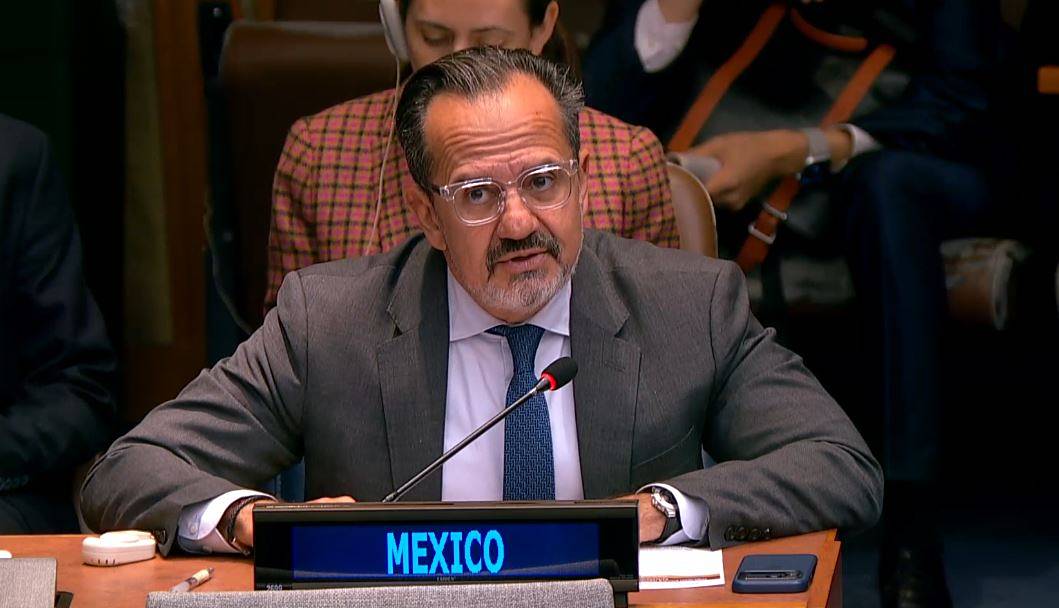
“For Mexico, sea level rise is not an abstract forecast,” said that country’s representative. Noting that it is already transforming Mexico’s coasts and affecting the livelihoods of its citizens, he asked: “How do we protect not just our territory, but communities, cultures and the ways of life that give meaning to this territory?”
Mexico has 11,000 kilometres of coastline, highly exposed to coastal erosion and extreme climate events, he pointed out. Illustrating the human impact, he spotlighted the state of Tabasco, which lies along the Gulf of Mexico. Here, “the fishing community of El Bosque saw how the sea gradually swallowed homes, streets and community spaces”.
As a result, he said that “families had to resettle through a process in which communities, Government and civil society participated”. Experiences such as this demonstrate that “effective adaptation cannot merely depend on infrastructure or technology”, he said, underlining the importance of “critical knowledge, participation, appropriation and trust”.
“What is being lost cannot be measured merely in square kilometres,” he observed, which is why Mexico advocates for a human-centred response to sea level rise that prioritizes the human rights of people in vulnerable situations.